
PhDs/PostDocs

Dr. rer. nat. Nicole Andrée-Busch, PostDoc AG Brinkmann
Technische Universität Braunschweig (P01)
- n.andree@tu-braunschweig.de
Durch mein Biologiestudium an der Technischen Universität Braunschweig wurde mein Interesse für das faszinierende Wechselspiel zwischen Pathogen und Wirt geweckt. Während meiner Bachelorarbeit und eines Auslandsaufenthalts am Forestry and Agricultural Biotechnology Institute (FABI) der University of Pretoria in Südafrika habe ich mit verschiedenen pflanzenpathogenen Pilzen gearbeitet, und in meiner Masterarbeit am Julius Kühn Institut mit pflanzenpathogenen Viren. Für meine Promotion wechselte ich in den Fachbereich Genetik und erforschte den Prozess des prä-mRNA Spleißens in der Spalthefe. In der Arbeitsgruppe von Melanie Brinkmann vertiefe ich mein Wissen auf dem spannenden Gebiet der Virus-Wirt-Interaktionen und beschäftige mich mit der Frage, wie Herpesviren das Immunsystem ihres Wirts manipulieren, um so lebenslange Infektionen zu etablieren. Neben der Planung und Durchführung von Experimenten im Labor und der Betreuung von Abschlussarbeiten bin ich auch in der Lehre tätig und betreue Praktika und halte Vorlesungen. Als wissenschaftliche Koordinatorin der DEEP-DV Forschungsgruppe bin ich für die wissenschaftliche Administration dieser Gruppe verantwortlich. Diese Position ermöglicht es mir, die spannende Forschung im Labor mit Projektmanagement und Öffentlichkeitsarbeit zu verbinden.
In meiner Freizeit bin ich gerne in unserem Garten aktiv und verbringe Zeit in der Natur mit meinem Pferd Donatello (‘Dickie’).
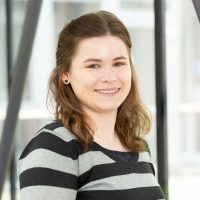
Thalea Buchta, PhD student Brinkmann lab
Technische Universität Braunschweig (P01)
- t.buchta@tu-braunschweig.de
My scientific journey began at the University of Leipzig where I obtained my bachelor degree in biochemistry. Following that, I graduated at the University of Tübingen with a Master in biochemistry. I chose to study biochemistry not only because I had a knack for chemistry, but also because I was always fascinated by the complexity of life and how molecules “talk” to each other. I am now taking this curiosity a step further as a PhD student at the Technische Universität Braunschweig, where I conduct research on the interplay between herpesviruses and their host cells. Specifically, I am investigating how the herpesvirus Human Cytomegalovirus (HCMV) interacts with the cellular Zinc Finger Antiviral Protein (ZAP), an RNA-binding protein that comprises four isoforms with distinct expression kinetics. I am especially interested in the immediate-early stage of infection: how do these isoforms affect progression of infection, which cellular and viral transcripts are bound by ZAP, with which cellular or viral proteins does ZAP interact with, and does HCMV exploit ZAP for its own benefit? In my free time, I play soccer in a local club, go on long-distance runs or bike rides, or hike in our nearby national park, the Harz mountains. On the flipside, I enjoy relaxing with my cats Sam and Frodo.
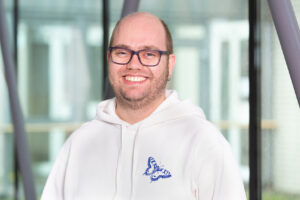
Oliver Maier, PhD student Brinkmann lab
Technische Universität Braunschweig (P01)
- oliver.maier@tu-braunschweig.de
My scientific career started at the Technische Universität Kaiserslautern, where I earned my bachelor degree in Bio Sciences in 2020. I then continued with my master studies in Bio Sciences at the University of Würzburg and finished in 2023. During this time, I developed a strong interest in immunology, particularly in how immune cells interact with various pathogens. Fascinated by the ability of viruses to manipulate the immune system, I decided to pursue a PhD at the Technische Universität Braunschweig, focusing on human cytomegalovirus (HCMV). HCMV is one of the nine known human herpesviruses and is capable of establishing lifelong infections through a persistent state known as latency. Reactivation from latency can lead to severe, and often fatal, complications in affected individuals. The central focus of my PhD research is to study the role of viral and cellular proteins in the context of viral latency and reactivation. Outside the lab, I enjoy spending time with friends, going for walks, dancing, and travelling.
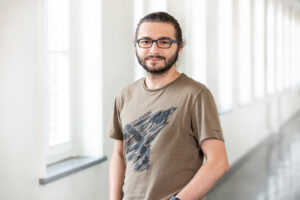
Umut Tank, PhD student Brinkmann lab
Technische Universität Braunschweig (P01)
- umut.tank@tu-braunschweig.de
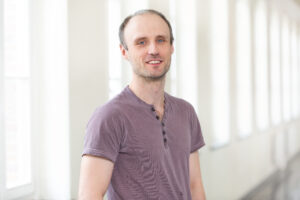
Dr. rer. nat. Thomas Hennig, PostDoc AG Dölken
Medizinische Hochschule Hannover (P02)
- hennig.thomas@mh-hannover.de
Der Beginn meiner wissenschaftlichen Karriere war das Mikrobiologie und Virologie Studium an der University of Warwick in England. Während meines Bachelorstudiums absolvierte ich ein einjähriges Praktikum bei Novartis in Horsham (England), wo ich die molekulare Antwort von Neutrophilen nach Behandlung mit verschiedenen Hemmstoffen untersucht habe. Meinen PhD erhielt ich später am Imperial College London. Unterstützt durch das Wellcome Trust PhD Programm habe ich im Labor von Peter O’Hare hauptsächlich an den ersten Schritten der Infektion von Herpes Simplex Virus 1 (HSV-1) gearbeitet. Dabei ging es um die Funktion eines nukleären Lokalisationssignals (NLS) in UL36 und wie durch NLS Viruspartikel zum Nukleus geleitet werden. Als Postdoc im Labor von Lars Dölken an der Julius-Maximilians-Universität Würzburg arbeite ich derzeit daran herauszufinden, wie die HSV-1 Transkriptionsterminierung und die Chromatinstruktur durch die Funktion zweier viraler Proteine, ICP27 und ICP22, beeinflusst werden. Außerdem untersuchen wir die UL36 Proteasefunktion gegen Ubiquitin und wie dies zur Beeinflussung der Interferon-stimulierten Genexpression beiträgt, ein Projekt, mit dem ich mich bereits in meiner PhD Zeit beschäftigt habe.
In meiner Freizeit stehen hauptsächlich sportliche Aktivitäten wie Squash und Klettern auf dem Programm. In den letzten drei Jahren habe ich mich dabei auf die Verbesserung meiner Kletterfähigkeiten durch Bouldern konzentriert.
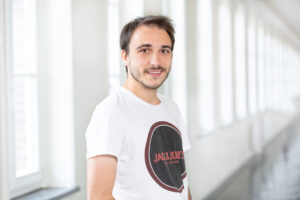
Ich bin Doktorand im virologischen Institut in Würzburg und untersuche eine weitere Methode, mit der Viren das menschliche Immunsystem unterwandern. Ich habe meinen Bachelor und Master in Biochemie in Würzburg gemacht, wo ich auch zum ersten Mal mit dem Fachgebiet der Virologie in Berührung gekommen bin. Dort habe ich mich viel mit Herpesviren beschäftigt, die mich wegen ihrer unglaublichen evolutionären Anpassungsfähigkeit an ihre Wirte faszinieren. Ich denke, Viren sind ein großartiges Werkzeug, mit dem wir alle möglichen Prozesse in unseren eigenen Zellen untersuchen können, indem wir beobachten, wie sie durch das Virus gestört werden.
In diesem Forscherzusammenschluss möchte ich die Rolle zweier menschlicher Proteine (DTX3L/Parp9) untersuchen, die eine Rolle im angeborenen Immunsystem und bei der Reaktion auf Schäden in der DNA zu spielen scheinen. Diese Funktionen werden durch ein Herpes-Virus-Protein gestört, welches wir nutzen können, um Einblick in die Rolle von DTX3L und Parp9 zu gewinnen. Für dieses Vorhaben werden wir Hochdurchsatz-Sequenzierung und ein Werkzeug zum rapiden Abbau zellulärer Proteine einsetzen.
In meiner Freizeit treibe ich gerne Sport, z. B. Joggen oder Bouldern oder alles andere, bei dem man aktiv ist und sich bewegt. Andernfalls findet man mich höchstwahrscheinlich beim Lesen.
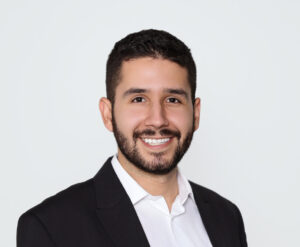
Santiago Alvarez Cardenas, Doktorand AG Dölken
- AlvarezCardenas.Santiago@mh-hannover.de
As a researcher with a passion for understanding how pathogens interact with their host at the molecular level, I have developed a strong interest in virus-driven manipulation of gene regulation. During my Biomedicine MSc training across Strasbourg, Luxembourg, and Mainz, I focused on the gut-liver axis, immune signaling, and transcriptional responses during fibrosis, gaining experience in RNA biology, multi-omics data analysis, and inflammation.
Joining Lars Dölken’s group allows me to expand this fascination into the world of herpesviruses, which have evolved remarkable strategies to persist in the human body for life. My PhD project investigates pervasive transcription in human cytomegalovirus infection, studying how viral genomes recruit and exploit host RNA polymerase II and how viral factors shift transcription from non-productive to productive programs. By combining virology and transcriptomic approaches, I aim to contribute to a deeper understanding of how HCMV establishes infection and evades immune surveillance.
Outside the lab, I enjoy traveling, exploring new food, hiking in nature, watching Formula 1 races, and playing tennis. I also love learning about world history and different cultures.
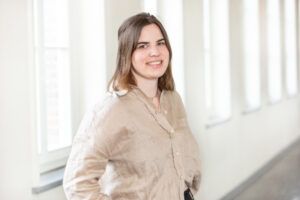
Ich bin Bioinformatikerin und interessiere mich für die Regulierung der Immunabwehr bei Virusinfektionen und die virale Gegenregulation. Es fasziniert mich, wie sich Viren an ihren Wirt anpassen und es schaffen viele hoch entwickelte Immunabwehrmechanismen zu umgehen. Die Analyse großer Datensätze sowie die Modellierung wichtiger biochemischer Prozesse interessieren mich seit meinem Biochemiestudium an der Universität Würzburg.
In diesem Projekt möchte ich herausfinden, wie transkriptionelle Bursting-Kinetiken in der Immunantwort reguliert werden und wie das Herpes Simplex Virus I diese moduliert. Um dieses Ziel zu erreichen, werde ich die Bursting-Kinetiken modellieren und sehr viele Hochdurchsatzdaten analysieren.
In meiner Freizeit spiele ich gerne Klavier und bin immer für einen Spaziergang oder eine Wanderung zu haben.
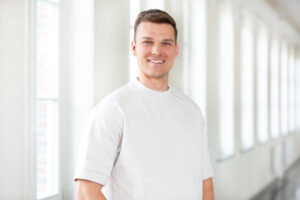
Seit Beginn meines Studiums in den molekularen Lebenswissenschaften möchte ich die molekularen Mechanismen biologischer Prozesse, ihre (epi-)genetischen Grundlagen sowie ihre Regulation auf verschiedenen Ebenen verstehen. Es fasziniert mich, dass kleine, biologische Entitäten wie Viren die zelluläre Homöostase stören und dadurch schwere Krankheiten mit fatalen Folgen verursachen. Es ist wirklich erstaunlich, welche Strategien Viren evolviert haben, um die Zellfunktionen zu ihrem eigenen Vorteil zu manipulieren und das Immunsystem zu umgehen. Deshalb habe ich ein starkes, wissenschaftliches Interesse die ursächlichen Pathogenitätsfaktoren aufzudecken und ihre Auswirkungen auf wichtige Zellfunktionen zu ergründen.
Das Hauptziel unseres Forschungsprojekts besteht darin, wirtseigene und virale RNA-bindende Proteine zu identifizieren, die bei Herpes simplex Virus-1-Infektionen eine Rolle spielen. Da RNA-bindende Proteine als wichtige Regulatoren bei der Genexpression fungieren, möchten wir ihre Arbeitsweise im Kontext viraler Infektionen untersuchen.
Außerhalb des Labors, verfolge ich leidenschaftlich Sport und spiele auch selbst in einem kleinen Verein Fussball.
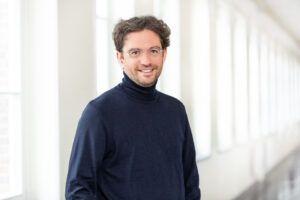
Ich bin Molekularbiologe, und in meiner Forschung bin ich primär daran interessiert, was in Zellen, Organoide oder einem ganzen Organismus bei der Ansteckung mit einem Virus geschieht. Genauer gesagt untersuche ich die transkriptionelle und post-transkriptionelle Regulation der Gen-Expression mittels Hochdurchsatzmethoden. Für das Herpes simplex virus 1 (HSV-1) haben wir gezeigt, wie in menschlichen Hautzellen (Fibroblasten) bei über Tausend Genen Antisense-Transkripte entstehen. Diese können u.a. das Zelltod-Gen BBC3/PUMA bremsen, und damit verhindern, dass die infizierte Zelle abstirbt und somit mehr Virus produziert. Zudem haben wir auf Grundlage der Einzelzellsequenzierung den Nrf2-Transkriptionsfaktor als wesentlich für die HSV-1-Infektion identifiziert. In Forschungsprojekten zu SARS-CoV-2/COVID-19 haben wir zu Untersuchungen der Pathogenese mittels Einzelzellsequenzierung beitragen – von Zelllinien über Tiermodelle hin zu Daten aus Patientinnen und Patienten. Daraus haben wir starke Aktivierungen von Macrophagen und Neutrophilen sowie inflammatorische Prozesse in Endothelzellen als möglicherweise wesentliche Ursachen für schwerere COVID-19-Krankheitsverläufe identifiziert.
In der Freizeit lese ich gerne, schaue Filme, oder bin draußen.
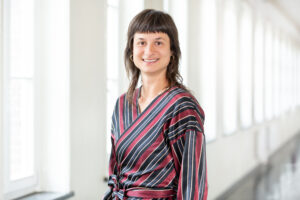
Dr. rer. nat. Veronika Brinschwitz, PostDoc Fischer lab
University Medical Center Hamburg-Eppendorf, UKE (P04)
- v.brinschwitz@uke.de
As a researcher at the interface between structural biology and virology, I have always been interested in the pathogenesis of diseases and the underlying molecular mechanisms. I was able to pursue this interest during my studies of pharmaceutical sciences in Freiburg and Halle (Saale) and to deepen it during my PhD studies in the group of Nicole Fischer in Hamburg. My research focuses on the Merkel cell polyomavirus (MCPyV), a human tumor virus that causes skin cancer. I focus on the viral protein large T-antigen (LT), which is involved in tumorigenesis and plays an important role in the life cycle of MCPyV. I analyze the structural properties of LT and try to relate them to novel biological functions. In the research network I am investigating the interaction between human polyomaviruses and PML-nuclear bodies and how these can be manipulated for viral replication.
Outside of work, I enjoy traveling, being creative, and reading.

Lisann Marie Röpke, PhD student Fischer lab
University Medical Center Hamburg-Eppendorf, UKE (P04)
- l.roepke@uke.de
During my master’s studies in Molecular Life Science at the University of Hamburg, I started working on the tumor virus Merkel Cell Polyomavirus (MCPyV) in the group of Prof. Dr. Nicole Fischer, which sparked my fascination with signalling pathways involved in cancer development in the context of viral infection. As an undergraduate student assistant, I also worked with induced pluripotent stem cell derived skin organoids (SkOs). This experience motivated me to explore organoid technology further by joining Dr. Laura Pellegrini’s group at King’s College London for an internship on choroid plexus organoids. Afterward, I began my PhD at the Institute of Molecular Virology and Tumorvirology at the University Medical Centre Hamburg.
In my research as a PhD student, I now investigate how MCPyV modulates the intrinsic immune system using SkOs as the first productive infection model of MCPyV. My goal is to identify host and viral factors that enable MCPyV immune evasion and lifelong persistence by testing different viral mutants and treatment approaches.
In my spare time, I enjoy spending time with my cats, playing board games and reading a good fantasy novel.
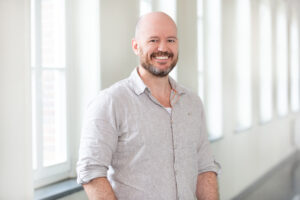
Dr. rer. nat. Thomas Günther, Senior Scientist Grundhoff lab
Leibniz-Institut für Virologie – LIV (P05)
- thomas.guenther@leibniz-liv.de
After graduation in biochemistry and molecular biology at the University of Hamburg, Germany, I joined the group of Adam Grundhoff at the Leibniz Institute of Virology. At that time I already started working on the early chromatinization of herpesvirus genomes with a focus on latent Kaposi’s sarcoma associated herpesvirus (KSHV) infection. During that time, I became interested in polycomb repression of different viruses using comparative approaches. In 2011, I received the doctorate and took the opportunity together with my colleagues to build up the Institute’s next generation sequencing (NGS) facility headed by Adam Grundhoff. In the following years I became an expert in NGS sequencing technologies and acquired deeper skills in bioinformatics. Aside from that I also developed a main interested in high resolution live-cell microscopy. I am now a senior scientist in the research unit Virus Genomics and also took the duties of the radiation protection officer to coordinates the institute’s radiation safety measures.
Main focus of my current research are comparative approaches to investigate general aspects of chromatin acquisition and also host regulation by different viruses, in particular different repression mechanisms using e.g. a wide range of sequencing technologies. As part of my interest in microscopy, I also establish live-cell imaging approaches to visualize viral DNA upon infection in real-time, that allow investigating infections on a single episome/genome level.
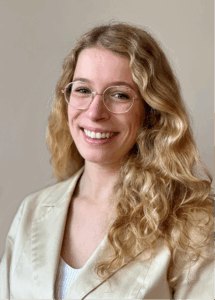
Marie Vollmost, PhD student Grundhoff lab
Leibniz-Institut für Virologie – LIV (P05)
- marie.vollmost@leibniz-liv.de
Ever since childhood, I have been fascinated by life at the molecular level and wanted to learn more about processes that cannot be observed with the naked eye. In my bachelorthesis in Molecular Life Sciences, I therefore used microscopy to study the intracellular processing of borreliae in macrophages.
I deepened my interest in infection biology during my master’s program, where I became particularly intrigued by virology. For my masterthesis, I joined the research group of Adam Grundhoff at the Leibniz Institute of Virology. There, I analyzed the role of BET proteins in latent gene expression and the chromatin landscape of Kaposi’s sarcoma-associated herpesvirus (KSHV).
For my PhD, I have continued my research in Adam Grundhoff’s group, focusing on the epigenomics of gammaherpesviruses during latency. In particular, I study how the Human Silencing Hub (HUSH) contributes to the organization of the chromatin landscape. In addition to microscopy, I use specialized sequencing techniques such as ChIP-seq, PRO-seq, and CAGE-seq. I greatly enjoy working with these bioinformatic approaches and see them as an excellent opportunity to further expand my expertise in this field.
Outside the lab, you can find me on the tennis court, in the mountains, or at home – where I like to be creative, for instance by knitting and painting, or by watching American football.
Romina Vargas Ayala, PhD student Virus Genomics Grundhoff lab
Leibniz-Institut für Virologie – LIV (P05)
- romina.vargas@leibniz-liv.de
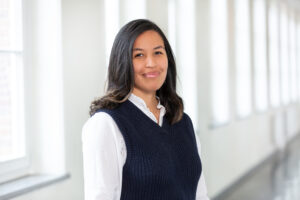
I am a molecular biologist originally from Peru, trained in France in virology and molecular biology at the IARC of the WHO. I joined the DEEP-DV team in 2021 as an associated PhD student in the Grundhoff lab. Since the beginning of my scientific studies, I became fascinated by the intricate interactions between viruses and their hosts, particularly by the strategies deployed by large DNA viruses like KSHV, which I use as a tool to study chronic viral infections. My PhD project investigates the mechanisms underlying herpesvirus latency, focusing on chromatin silencing and the role of subnuclear compartments and promyelocytic leukemia nuclear bodies (PML NBs). Herpesviruses can establish a latent state in host cells in which they remain dormant for extended periods of time and are reactivated under certain conditions. A key component of latency is epigenetic control of the viral episome, in particular through chromatin modifications that repress viral gene expression.
This project aims to investigate how latent viral chromatin is affected by subnuclear episome localization and association with membraneless nuclear compartments such as PML-NBs. I use advanced molecular biology techniques such as live-cell single-molecule imaging, CRISPR-go technology and ChIP-seq to investigate the spatial dynamics of latent herpesvirus genomes and associated chromatin changes.
Outside of my research, I enjoy learning about ancient history, playing with my chinchillas and dancing, especially salsa.

Schon in meiner Kindheit wurde ich neugierig darauf wie unser Immunsystem funktioniert und später waren meine Forschungsthemen immer mit der Immunologie verbunden. Während meines Bachelorstudiums der Molekularbiologie und Genetik an der Technischen Universität Istanbul, Türkei arbeitete ich in einem immunologischen Labor und lernte etwas über B-Zellen und ihre Reaktion auf Helicobacter pylori-Infektionen und Tumor-assoziierte Makrophagen. Während meines Studiums der Molekularen Medizin an der Universität Ulm habe ich mich vier Jahre lang hauptsächlich mit Immunmodulation und dem Ubiquitin-Proteasom-System bei hämatologischen Malignomen beschäftigt. In meiner Doktorarbeit freue ich mich darauf, mit Prof. Dr. Benedikt Kaufer und unserer Arbeitsgruppe Herpesviren zu erforschen. Mein derzeitiges Forschungsthema ist das humane Herpesvirus 6 (HHV-6). Wie andere Herpesviren ist es ein erfolgreicher Erreger, der seit Tausenden von Jahren mit seiner Wirtsspezies koexistiert, was auf seiner Fähigkeit beruht, zwei unterschiedliche Zustände zu durchlaufen: den Latenz- und den Lytizitätszyklus. HHV-6 bleibt in seinem Wirt effizient latent, während es sich von Mensch zu Mensch ausbreitet und fast alle von uns in den ersten Lebensjahren erfolgreich infiziert. Interessanterweise stellt HHV-6 die Aufrechterhaltung seines Genoms während der Latenzzeit sicher, indem es sich in die Wirts-Telomere integriert. In unserem Projekt möchten wir verstehen, wie die Etablierung der Latenz orchestriert wird und wir möchten wissen, ob wir die Entscheidung zwischen lytischer Replikation und Latenz von HHV-6 beeinflussen können.
In meiner Freizeit lese ich gerne Belletristik und wissenschaftliche Bücher, sehe mir verschiedene Filme und Serien an, fotografiere, gehe spazieren und treffe mich mit meinen Freunden.

Laura Wolferseder, PhD Student ULM Stamminger lab
Universitätsklinikum Ulm (P07)
- laura.wolferseder@uni-ulm.de
Since my studies in Molecular Medicine at Ulm University, I have been fascinated by the complex molecular interactions between viruses and their host cells. I am particularly intrigued by the highly specialized strategies viruses have evolved to evade immune surveillance and to selectively modulate or disable cellular defense mechanisms. These dynamic adaptation processes highlight how finely tuned the interplay between pathogen and host truly is and how much remains to be uncovered about the underlying regulatory networks.
My research focuses on human cytomegalovirus (HCMV) and its interaction with components of intrinsic immunity, particularly cellular restriction factors. The aim of my work is to characterize these complex interactions at a mechanistic level and to better understand their functional consequences for the course of viral infections.
Beyond my scientific work, I find balance in sports, especially swimming and running, and enjoy staying active and spending time with friends.
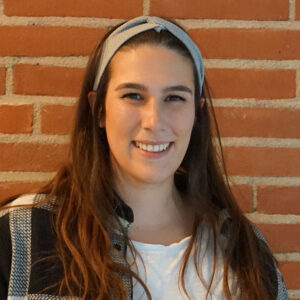
Mein Forschungsleben als Virologin begann als Masterstudentin an der Technischen Universität München. Während dieser Zeit beschäftigte mich die Regulierung der produktiven Infektion des humanen Adenovirus durch verschiedene PML-Isoformen. Glücklicherweise konnte ich während meiner Doktorarbeit mein Interesse für Epigenetik mit meiner neu entstandenen Faszination für humane Adenoviren verbinden. Als Doktorandin bei Sabrina Schreiner habe ich die Rolle des Chromatin-assoziierten Proto-Onkogens DEK in der Modulierung des Wirts- und Adenovirusgenoms untersucht, wobei wir neue Zielmoleküle für neuartige therapeutische Strategien bereitstellen konnten. Während meines Postdocs an der Medizinischen Hochschule Hannover werde ich die Manipulation und posttranslationale Modifikation epigenetischer Faktoren während einer humanen Adenovirusinfektion weiter untersuchen um neue Erkenntnisse über frühe Stadien der viralen Genexpression, Latenz und die virusvermittelte Onkogenese zu gewinnen.
In meiner Freizeit gehe ich gerne wandern und vor allem auf Konzerte, auf Reisen und verbringe meine Abende mit Freunden und Familie bei gutem Essen.
- julia.mai@uniklinik-freiburg.de
Masih Nazari, Doktorand AG Schreiner
Universitätsklinikum Freiburg (P08)
- masih.nazari@uniklinik-freiburg.de

Enrico Caragliano, PostDoc Bosse lab
Center for Structural Systems Biology, CSSB (P09)
- enrico.caragliano@leibniz-liv.de
I am a trained molecular biologist and virologist. My research interests focus on the formation of virus-induced compartments and the interaction of cellular and viral factors in their development. My interest in herpes viruses began during my master’s thesis in Messina. At that time, I investigated the role of a viral protein in modulating apoptotic signalling pathways during infection with herpes simplex virus type 1 (HSV-1). As an intern at the University of Rijeka in Prof. Stipan Jojnic’s laboratory, I worked on a mouse model for congenital infection with human cytomegalovirus (HCMV). In 2018, I began my PhD at the Leibniz Institute for Experimental Virology (HPI) in Hamburg as part of a joint project between the working groups of Jens Bosse and Wolfram Brune on HCMV replication compartments (RCs). I am currently continuing my dissertation at the Centre for Structural Systems Biology (CSSB) in Hamburg. I am investigating how HCMV uses liquid-liquid phase separation (LLPS) to form its replication complexes (RCs) directly on the viral genome, thereby ensuring its replication. We are particularly interested in the molecular composition of these compartments using state-of-the-art live-cell microscopy and novel networking methods.
In my free time, I enjoy cycling in the Hamburg area, playing video games and reading historical books.

Nadine Brückner, Doktorandin AG Viejo-Borbolla
Medizinische Hochschule Hannover (P10)
- brueckner.nadine@mh-hannover.de
Ich habe mit einem Biologie Studium an der Leibniz Universität Hannover, der Tierärztlichen Hochschule Hannover (TiHo) und der Medizinischen Hochschule Hannover (MHH) begonnen, als ich meine ersten Vorlesungen auf dem Gebiet der Virologie hatte. Mein Interesse war damals schnell geweckt und ist bis heute nicht verflogen. Besonders die Übernahme der Wirtszellmaschinerie durch virale Partikel hat mich sehr fasziniert. Folglich führten meine ersten Schritte in der Forschung zu den verschiedenen Wechselwirkungen zwischen viralen und Wirts-Proteinen, die für den Zelleintritt und die Replikation erforderlich sind.
Während meiner Arbeit in der Gruppe von Prof. Abel Viejo-Borbolla an der MHH wollen wir die Latenzphase des Lebenszyklus des Varizella-Zoster-Virus erforschen. Dabei steht die Ausbildung und Aufrechterhaltung der Latenz im Mittelpunkt, weshalb wir auf Marker verschiedener Histone Chaperone und reprimierender Transkriptionsfaktoren testen und gleichzeitig beobachten wollen ob virale Proteine die VZV-Latenz hemmen können.
Wenn ich nicht an meiner Doktorarbeit arbeite, backe ich gerne Kuchen oder Kekse (die ich gelegentlich mit meinen Kollegen teile), male oder mache lange Strandspaziergänge an der deutschen Küste.
Zia Barnard, Phd Student Viejo-Borbolla lab
Medizinische Hochschule Hannover, MHH (P10)
- Barnard.Zia@mh-hannover.de
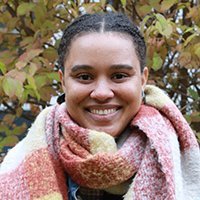
It was at high school that I first encountered the term, “pathogens,” sparking my fascination with the tiny living things responsible for many diseases. My curiosity of viruses deepened when I explored the molecular pathogenesis of COVID-19 virus during my master’s dissertation at the University of Edinburgh. When I served as a technician at the Whitehead Institute for Biomedical Research, I understood how to model the complexity of the interplay of genetics and cell-type specific molecular mechanisms in human stem cell derived models and how those contribute to human disease. Through those various research experiences, I realized I wanted a career that would continuously challenge me, nurture my passion for learning, and allow me to contribute to scientific discovery. Driven by this desire, I began a PhD in Infection Biology at Hannover Medical School, in the lab of Abel Viejo-Borbolla.
I study the Varicella Zoster Virus (VZV), whose primary infection in humans causes varicella (chickenpox), predominantly affecting unvaccinated children. However, after infection, the virus remains latent in the peripheral sensory neurons and could later reactivate, appearing as zoster (shingles). Using human stem cell derived models of sensory neurons, I aim to study how the innate immune systems of these cells respond to viral infections and also how viruses evade those defenses. Insights from this research could help identify key molecular factors or mechanisms for the development of targeted therapeutics.
I am an adventurous soul and outside of lab, I enjoy sightseeing and hiking. I also enjoy immersing myself in new cultures through travel, trying new food and exploring history and art.
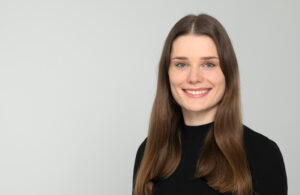
Nina Bracker, PhD student Czech-Sioli lab
University Medical Center Hamburg-Eppendorf, UKE (P10)
- n.bracker@uke.de
I was already fascinated by chemistry and biology at school, which is why I studied Molecular Life Science at the University of Lübeck. I did my master’s thesis at the University Medical Center Hamburg-Eppendorf in Nicole Fischer’s research group. During this time, my fascination with virology grew, especially with herpesviruses and their ability to establish latency in the host. I also had the opportunity to work with organoids for the first time, which impressed me greatly as it opened up a whole new world of model systems for me.
In my PhD project in Manja Czech-Sioli’s research group, I will build on my master’s thesis and investigate the infection of human skin organoids with the varicella zoster virus (VZV). Our focus will be on viral spread in the organoids, the immune system’s control of the infection, and the virus’s strategies for evading this control. I am looking forward to getting to know new methods and analysis tools and advancing the field of VZV research.
To balance out my work in the lab, I enjoy reading, listening to podcasts, and sports, preferably Pilates at the moment.
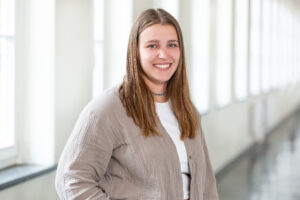
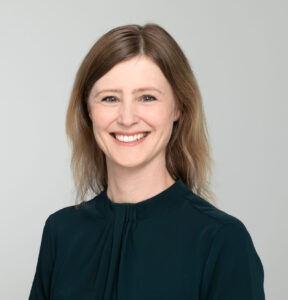
Dr. Vanessa van Rahden, project manager Fischer lab
University Medical Center Hamburg-Eppendorf, UKE
- v.vanrahden@uke.de
After completing my biology studies at the Technical University of Braunschweig, I started a PhD at the Institute of Human Genetics, University Medical Center Hamburg-Eppendorf (UKE). I investigated the role of the protein OCRL within the intracellular trafficking pathway, a 5-phosphatase which is depleted in the genetic disorder Lowe syndrome. I subsequently chose to move into industry to experience how findings discovered in basic research are translated into practical applications. I spent over a decade working in contract research organizations, specialized in digital PCR, next-generation sequencing, and ELISA applications, where I expanded my knowledge in assay development, validation, and clinical sample testing. In 2025, I returned to the UKE and started as a research project manager at the Institute of Molecular Virology and Tumor Virology. My main tasks are the support in preparing and reporting of research proposals, as well as with grant funding and personnel matters, and I manage the institute’s website. I find process optimization, such as the implementation of the electronic lab notebook, particularly exciting. Within the DEEP-DV research group, I am responsible for coordinating administrative tasks and organizing events. I am a family person who enjoys exploring nature with my two children, preferably on long hikes both near my home and on holidays.