



P10 - Manja Czech-Sioli &
Abel Viejo-Borbolla
Comparative analysis of varicella zoster virus spread, immune control and evasion employing complex skin and neuronal organoids


- Herpesvirus latency establishment
- Varicella zoster virus
- Comparative epigenetics
- Viral chromatin regulation by polycomb repressor complexes and PML nuclear bodies
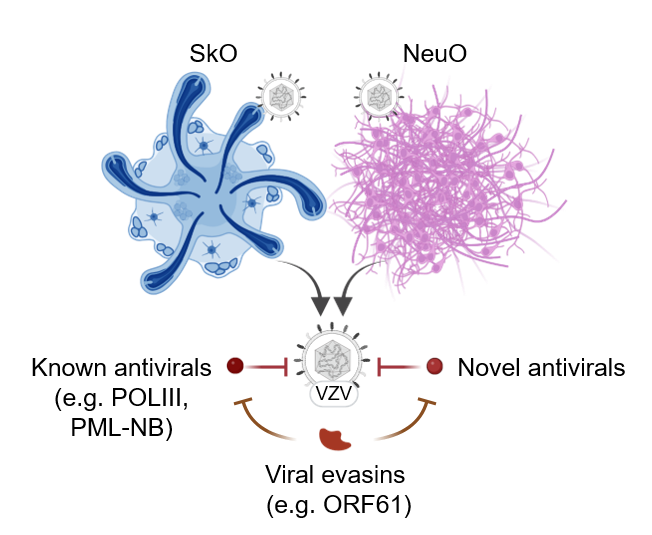
Varicella zoster virus (VZV) is a highly prevalent human pathogen that causes mild diseases as well as others associated with high morbidity and mortality, such as chronic pain, encephalitis and meningitis. The latter occurs more frequently in individuals with inborn errors of immunity in genes involved in VZV restriction. The outcome of infection depends on the ability of VZV to spread through different cell types in the skin and ganglia of the peripheral nervous system (PNS), and the ability of the cells to restrict the virus. How VZV spreads in these organs and how the intrinsic and innate immune responses control VZV is not well understood, partly because VZV is human specific. In this project, we aim to (i) understand how VZV spreads in the skin and PNS; (ii) to characterise the mechanism of action of known and novel antiviral factors and (iii) to discover how VZV evades and modulates these restriction factors. To do so, we will apply classical virology and omics techniques to investigate infection in organoids. Overall, this project will provide a broad overview of VZV pathogenesis revealing key information on VZV spread and potential novel mechanisms of intervention.